In 2025, advertising budgets aren’t just line items — they’re strategic investments that establish market significance, long-term growth, and brand strength in an increasingly dynamic business landscape. From digital dominance to purpose-driven storytelling, successful brands are refining how, where, and why they spend. In this comprehensive breakdown, we explore current allocation trends, strategic priorities like rebranding strategy and brand refresh, and how expert partners — such as a top Branding agency in Bangalore like Bud — help businesses optimize every advertising rupee.
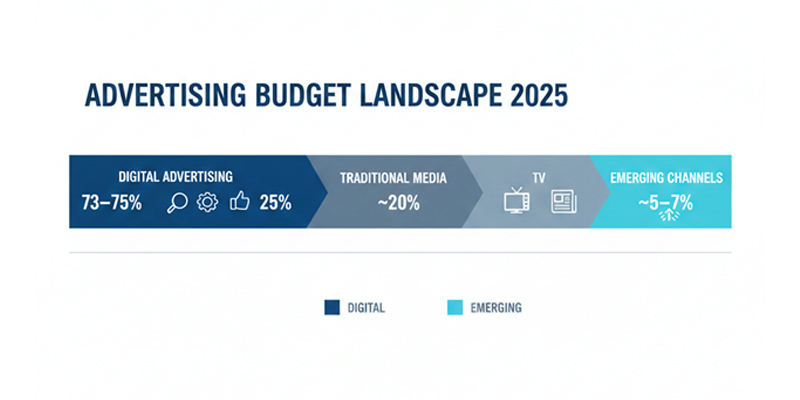
There’s no doubt that digital advertising has eclipsed traditional media in 2025. Findings suggest digital channels now command roughly 73–75% of total ad spend as brands chase measurable ROI, precision targeting, and scalable growth.
Within digital, allocations typically include:
Key takeaway: Digital has evolved from a tactic to a strategic core, enabling performance measurement, personalization, and rapid optimization — all necessary for any rebranding strategy or brand refresh initiative.
Productive budget allocation does more than keep the lights on — it fuels business strategy. In accordance with WARC’s Multiplier Effect research, companies that balance brand-building with performance advertising consistently outperform their peers, sometimes lifting ROI by up to 100%.
This matters for two reasons:
Innovative businesses now balance short-term performance with mid- and long-term brand strength — a shift every marketer should embrace.
By Revenue Share - Various companies still use revenue percentage benchmarks:
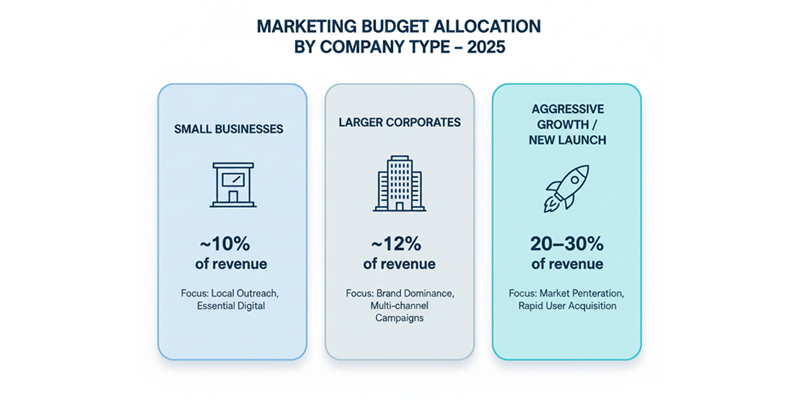
Marketing spend in 2025 remains closely linked to a company’s size and growth ambitions. Small businesses typically allocate around 10% of their revenue to marketing, focusing on cost-effective channels that deliver immediate visibility and leads. Larger corporates tend to spend slightly more, averaging about 12% of revenue, as they balance performance marketing with long-term brand building. Meanwhile, companies pursuing aggressive growth strategies or launching new brands often invest far more heavily, with marketing budgets reaching 20–30% of revenue, to quickly build awareness, capture market share, and establish a strong competitive presence.
According to recent industry forecasts.
Digital vs. Traditional
Social and Influencer Spend
B2C brands invest heavily in Instagram, TikTok, YouTube, and creator partnerships to influence Gen Z and millennial audiences.
a. Branding vs. Performance
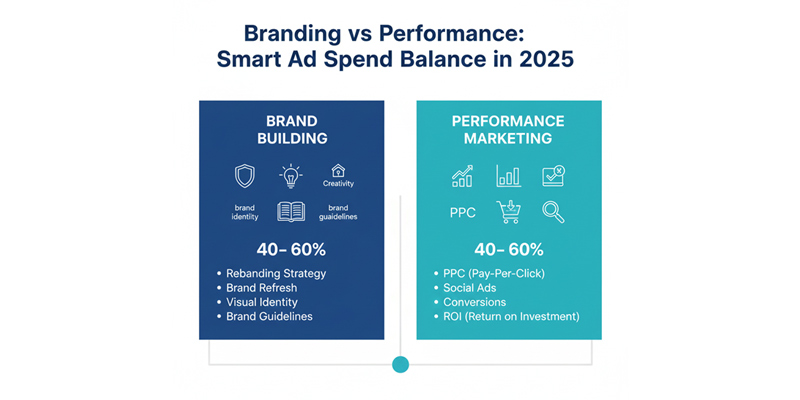
Today’s successful brands allocate 40–60% of their budget to brand-building activities and the rest to performance or direct response channels. This split helps maintain both awareness and measurable conversions.
Brand efforts include:
These foundational elements ensure a cohesive brand image across every touchpoint — from TVCs to TikTok Shorts.
b. Visual Identity & Brand Guidelines
Investments in visual identity and brand guidelines are no longer “nice-to-have” — they’re central to audience recognition and consistency across channels.
Why this matters:
Collaborate with experts like Bud to develop scalable branding systems that support long-term growth.
c. Rebranding Strategy & Brand Refresh
Rebranding isn’t just about a new logo or tagline — it’s a business transformation. In 2025, companies rebrand to:
Strategic rebranding involves:
Globally, with tighter budgets and a stronger focus on ROI, partnering with a team known for its creative and strategic strength can drive meaningful impact.
Take Bud: Bud offers end-to-end brand solutions, including:
📌 Bud’s philosophy: “Small Big Ad Agency” — delivering big ideas and measurable impacts without the overhead. Learn more at:
👉 https://www.budindia.com/ Bud India
Search Engine Marketing (SEM)
Social Media & Influencers
Programmatic & AI-Driven Ads
Website & E-commerce
A standout trend in 2025 is the rapid adoption of AI tools for creative generation, analytics, and automation. Brands that invest in AI-powered systems can:
AI isn’t just another tool — it’s becoming a strategic budgetary pillar.
While digital currently dominates, forward-looking brands are already piloting budgets toward:
These innovations would govern only 5–10% of budgets today, but they promise high engagement and an early-mover advantage.
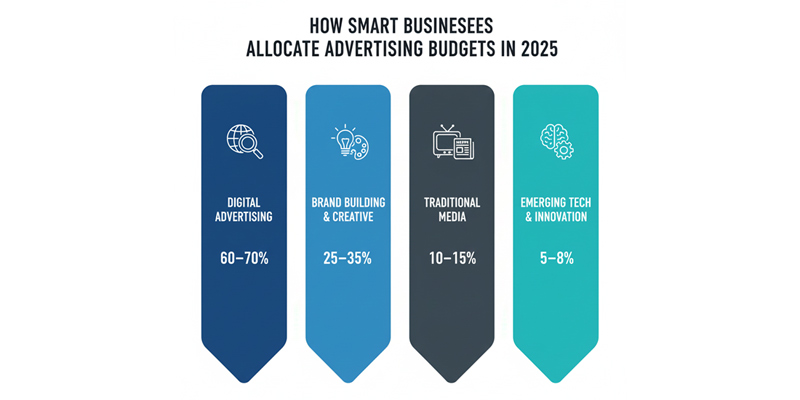
Example Budget Breakdown (Illustrative):
In a typical 2025 advertising budget, digital advertising commands the largest share, accounting for around 60–70% of total ad spend, as brands prioritise measurable performance, targeting, and scalability. Brand building and creative investments follow closely, accounting for approximately 25–35% and supporting long-term brand equity through strategy, storytelling, and design. Traditional media, including print, radio, and television, still play a supporting role, accounting for about 10–15% of the budget, mainly for mass reach and credibility. Finally, emerging technologies and innovation account for around 5–8% of spend, allowing forward-thinking brands to experiment with AI-driven marketing, immersive experiences, and new digital platforms.
This flexible structure prioritizes digital performance while safeguarding brand equity — essential for scaling through market shifts.
In 2025, smart advertising budgets reflect strategic priorities rather than legacy practices. They:
In today’s market, collaborating with experts like Bud can transform your brand from visible to strategically dominant.
Whether you’re planning a brand refresh or refining your ad mix, allocating your budget with insight will determine who leads—and who follows.
👉 Explore how Bud can help future-proof your advertising and brand strategy: https://www.budindia.com/ Bud India
WE ARE AN OFFICIAL GOOGLE PREMIER PARTNER