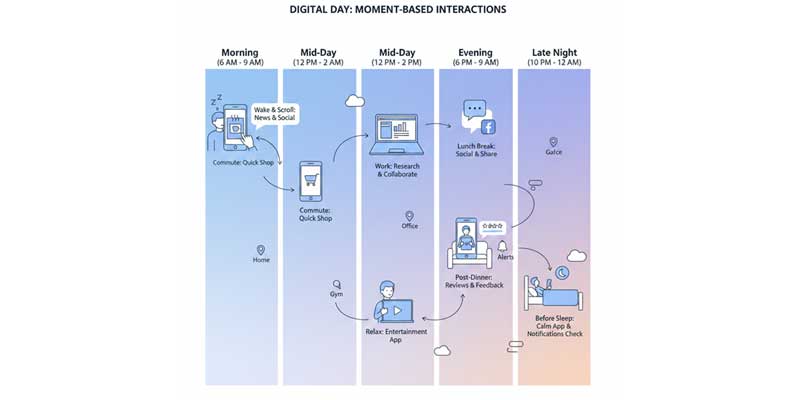
Marketers today are under pressure to present ads that really count to the audience's intent in the fast-changing digital world. Traditional forms of advertising, such as behavioral targeting, are becoming ineffective amid rising privacy concerns and the gradual elimination of third-party cookies.
Consequently, situational advertising is reappearing. This method will not require the use of personal information, as advertisements are shown depending on what the user is already reading. This makes advertisements more relevant and closer to the purpose of the audience.
A stronger content marketing strategy can also be supported by contextual advertising, which ensures brand messages are shown in the appropriate environment and at the right time. When combined with intelligent content distribution, it assists marketers in reaching the appropriate audience without infringing on privacy.
This paper will discuss why contextual advertising is a necessity in the digital era and the advantages it offers the modern-day marketer. This comprehensive guide is the place to start to understand how contextual advertising is shaping the future of digital marketing.
Contextual advertising refers to online advertisement that is defined by online advertising where advertisements are presented depending on the contents of a webpage rather than on the personal information of a user or the previous online activities. This is a method explore the page's text, images, and subject matter to present advertisements that are relevant to what the user is reading or viewing. An advertisement for hiking boots can be placed on a webpage that talks about outdoor activities or mountain climbing.
Contextual advertising targets what is on the page, unlike behavioral advertising, which follows users who are associated with different sites. It makes advertisements more likely to be applicable to the audience's intent at that time and helps solve the growing privacy issues, as no tracking of personal data is required.
Contextual advertising, as one of the components of an intelligent content marketing strategy, enhances the content distribution by ensuring that brand messages are placed in contexts where they are most likely to be acceptable. Such a tool as ContextDecision is even more valuable in the mobile app market, as it takes the real-world signals to learn better the user behavior and provide ads that are more aligned to the current real-life context without violating privacy.
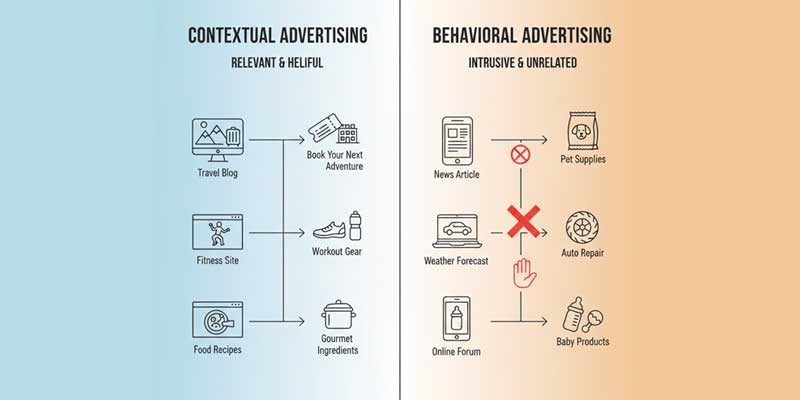
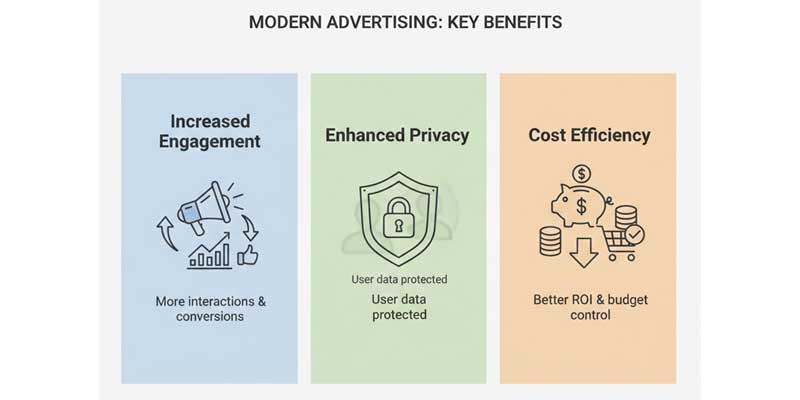
The primary benefit of contextual advertising enables advertisers to display advertisements that match the content that users are currently watching. Brands establish direct connections to audience intent through their practice of displaying advertisements next to content marketing strategies that match the targeted audience. Users who experience advertisements as beneficial instead of arbitrary most frequently proceed to click on ads and interact with content until they complete the desired conversion process.
The development of contextual ads allows users to browse various websites without their personal information being tracked, creating a less intrusive advertising experience. The process enhances the user experience while helping content marketers maintain relevant brand messages that customers find acceptable.
The increasing severity of privacy regulations, which include GDPR and CCPA, requires marketers to develop more secure methods for audience outreach. The solution to this problem is contextual advertising, which uses website content to determine which advertisements to show rather than relying on users' personal information. The system enables brands to deliver effective advertisements while maintaining compliance because it does not track user activities.
The current privacy-first method fulfills the requirements that today's users have developed. People prefer brands that respect their data, and contextual advertising helps build trust while aligning ads with audience intent—without compromising privacy.
Contextual advertising costs advertisers less than behavioral targeting, especially since third-party cookies are no longer available. Marketers no longer need expensive data or complex tracking tools. Ads are positioned to their natural locations, resulting in better return on investment and better content distribution.
This approach also works across multiple platforms, which include desktop, mobile apps, and connected TV devices. Marketers can expand their content marketing strategy by adapting their ads to different platforms and content while preserving their relevance and impact.

Bud is a leading content marketing agency and an AI platform built to improve mobile app engagement and increase revenue by leveraging real-world user context. Unlike traditional contextual advertising, which relies solely on the content being viewed, Bud’s strategy goes a step further by analysing over 200 mobile signals. Within just two seconds of app launch, it understands what a user is doing—whether they’re relaxing at home or moving on the go.
All data is processed directly on the user’s device, ensuring highly relevant interactions while respecting privacy. This approach helps brands align their content marketing strategy with real-time audience intent, resulting in better user experience, higher engagement, and more conversions. It also ensures smarter content distribution by delivering the right message at the right moment.
In the world of digital marketing, intent and real-time context of the audience have become as significant as great content creation and potentially more significant. The brands must transcend conventional creative messages and consider when, where, and how their target audience is most open to their intent. It involves having contextual information in your content marketing plan; therefore, your messages are delivered to the users at the appropriate time and place.
Bud, the company that specialises in digital integrated services, social media, search engine optimization, and online advertising, combines intelligent content distribution with a comprehensive understanding of the audience's intent to ensure campaigns are personalized and relevant, not generic and obtrusive. By matching user context and behavior with creative content, marketers can enhance user engagement, trust, and performance across all digital channels.
Partnering with Bud for your contextual advertising work will lead to better advertising results. Bud enables marketers to display advertisements that match both the content being viewed and users' current circumstances through its real-world user context technology. This allows brands to align messages more closely with audience intent, leading to higher engagement and better conversions.
Bud also processes all context data directly on the user’s device, without sending information to the cloud. This protects user privacy and builds trust, while still supporting a smarter content marketing strategy. By improving how and when messages are delivered, Bud makes content distribution more effective and relevant for modern, privacy-first advertising campaigns.
In today’s digital world, growing privacy concerns and the removal of third-party cookies are changing how advertising works. As a result, contextual advertising has become a smart and effective solution for modern marketers. By showing ads that match the content users are viewing, brands can connect better with audience intent, improve engagement, and stay compliant with privacy regulations.
When combined with advanced tools, contextual advertising becomes even more powerful. By adding real-world user context, brands can strengthen their content marketing strategy and improve content distribution without relying on personal data. This privacy-first approach delivers more relevant ads, better performance, and a positive experience for both marketers and consumers.
As a results-driven digital marketing agency and a performance-focused SEO Agency, Bud helps brands go beyond content creation by using real-time context to connect with the right audience at the right moment.
WE ARE AN OFFICIAL GOOGLE PREMIER PARTNER