In today’s digital landscape, generic ads that broadcast the same message to broad audiences are losing their effectiveness. With rising ad costs, increasing competition, and higher consumer expectations, an outdated advertising strategy fails to deliver the growth brands once relied on. The difference between average and remarkable results lies not in throwing more money at advertising, but in how that money is spent.
High-performing businesses are no longer asking “How wide can we cast our net?” — they’re asking “How deeply can we connect with the right people?” The answer lies in smarter targeting, ad personalization, and performance-driven thinking.
In this article, we explore why generic ads are failing and what the best brands are doing differently to achieve real impact.
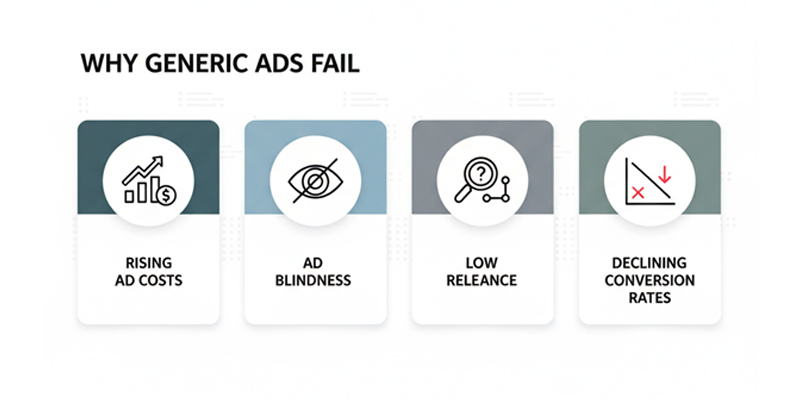
In the initial days of digital advertising, simply being present on search engines and social platforms could drive clicks and conversions. But times have changed. Several key shifts have made generic ads less effective:
Today’s users are loaded with hundreds of ad impressions daily. As a result, they’ve developed “ad blindness” to broad, untargeted messaging. Users engage only when content feels relevant to their current interests and needs.
Platforms such as Google and Meta have become more competitive, raising average cost-per-click and cost-per-acquisition. A generic ad might cost as much as a targeted one — but deliver far less in return.
Modern analytics and tracking tools provide deep insights into user behaviour — how they browse, what they search, and what they purchase. Advertisers who ignore this data are essentially leaving money on the table.
According to multiple industry benchmarks, campaigns that fail to tailor messaging to specific user intentions often show lower conversion rates and weaker paid media performance.
Today’s top performers are shifting away from generic ads and investing in strategies that prioritise customer relevance, data insights, and measurable outcomes. Here’s how they do it.
High-performing brands don’t start with ad creative — they start with a plan. They define:
This ensures every dollar spent contributes to a meaningful outcome. Without clear goals, even the best-looking ads can fail to deliver real results.
Ad personalization is more than inserting a user’s name in a headline — it’s about delivering tailored messages that resonate based on behaviour, intent, and stage in the buyer journey.
For example:
This level of personalisation drives higher engagement, better paid media performance, and more qualified conversions.
Generic ads treat everyone the same. High achievers segment audiences based on behaviour and value. Common segmentation strategies include:
By tailoring ads to segmented audiences, businesses deliver more relevant experiences than one-size-fits-all messaging.
What separates an average campaign from a high-performing one is not how it starts — but how it improves over time.
Top advertisers continuously run A/B tests on:
This iterative testing improves paid media performance and helps brands capture the best-performing combinations, boosting ROI over time.
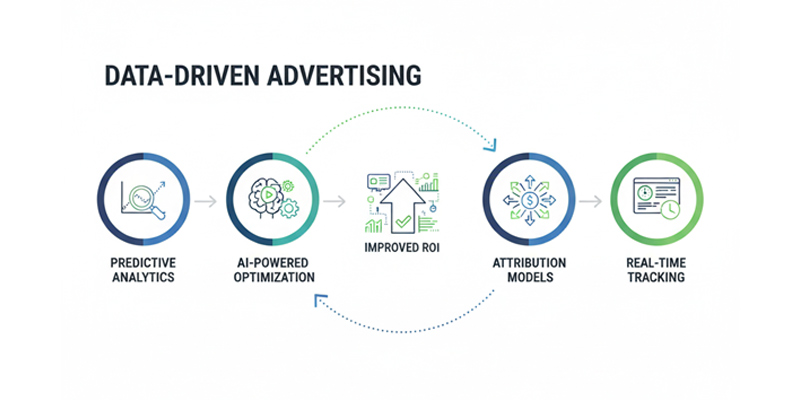
Modern advertising isn’t guesswork — it’s data-driven.
Smart brands use predictive models to understand which users are most likely to convert and the value they deliver over time.
Machine learning tools help optimise bidding strategies, forecast trends, and personalise creatives at scale — something generic campaigns can’t do.
Rather than relying on last-click attribution, high performers leverage models that credit multiple touchpoints, providing a more accurate picture of what drives conversions.
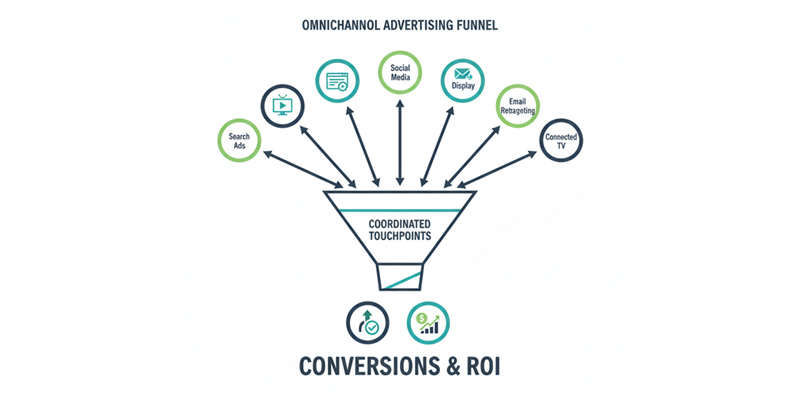
Generic ads often appear in isolation — a Facebook ad here, a search ad there. High-performing businesses build omnichannel experiences that reinforce messaging across platforms:
This coordinated approach increases brand recall and guides users smoothly through the customer journey.
While data and targeting set the stage, the creative itself must be persuasive.
High-performing ads:
Generic copy, by contrast, tends to be vague and forgettable.
Instead of evenly distributing ad spend, smart brands allocate more budget to:
This means pulling funds from underperforming ads and reinvesting in strategies that deliver real results.
Here’s how leading brands apply these principles:
Instead of showing one ad to all users, dynamic remarketing serves personalised content based on past interaction — a powerful driver of conversions.
Smart brands use sequence ads that guide users more profoundly into the funnel — from awareness to consideration to purchase.
Using existing customer profiles, platforms can build “lookalike” groups — new people with similar behaviour and higher conversion potential.
With all these moving pieces — data analytics, segmentation, creative strategy, performance optimisation — many businesses benefit from experienced partners.
For those seeking expert support, Bud offers tailored services that elevate advertising results. Whether you’re looking to enhance your advertising strategy or scale campaigns efficiently, the right partner makes a difference.
If you need specialised support, working with a ppc agency in Bangalore or a full-service advertising agency in Bangalore like Bud ensures your campaigns are optimised for performance — not just impressions.
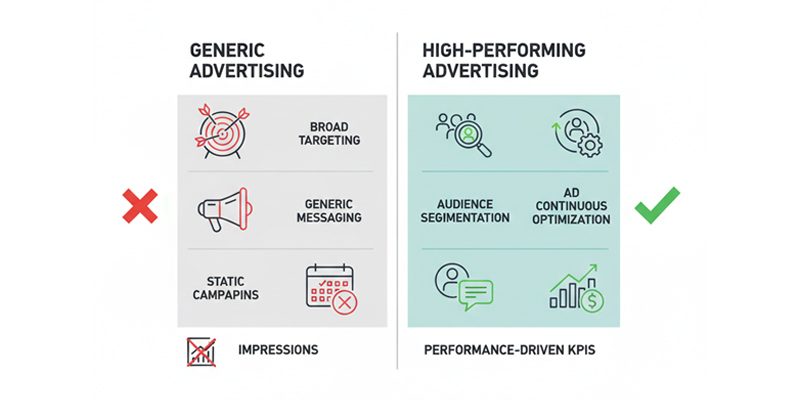
High-performing businesses approach advertising very differently from brands that rely on generic ads. Instead of broad targeting, they focus on deep audience segmentation to reach the right people at the right time. Rather than pushing one message to everyone, they use ad personalization to tailor communication based on user behaviour and intent.
Their campaigns are never static; they continuously test and optimise to improve results. Success is measured through performance-driven KPIs, not vanity metrics like impressions or clicks. Unlike isolated ads running on single platforms, they build coordinated omnichannel experiences.
Most importantly, decisions are guided by data and analytics, not guesswork—ensuring every move is strategic, measurable, and scalable.
Generic ads might seem easy to launch, but their impact is limited. High-performing businesses succeed because they prioritise:
As market dynamics continue to evolve, the brands that win are those who treat advertising not as a checkbox, but as a strategic engine for growth.
By investing in a thoughtful advertising strategy, focusing on ad personalization, and measuring real audience engagement, businesses can achieve stronger paid media performance and sustainable returns — even in a competitive landscape.
If you’re ready to stop wasting money on generic ads and unlock smarter growth, Bud is here to help you reimagine your advertising strategy and future-proof your results.
WE ARE AN OFFICIAL GOOGLE PREMIER PARTNER