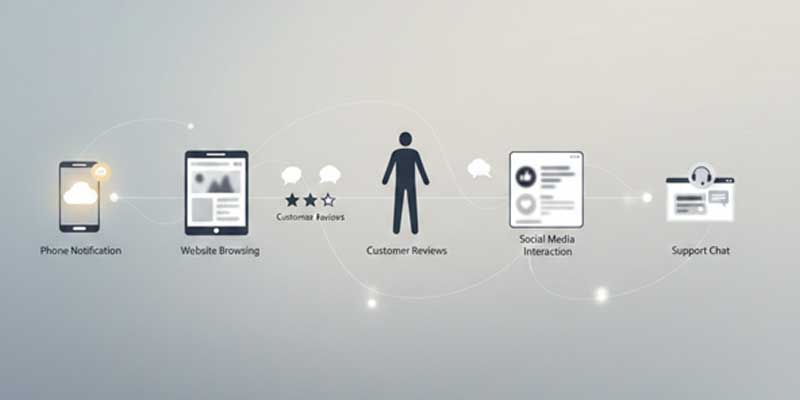
In the digital era, customers do not build trust by shaking hands, visiting offices, or talking face to face. It is built without anyone knowing or making much noise about it, and over the long run, through hundreds of small online interactions, some of which are not even consciously created by businesses. That is where the majority of brands fail. In their opinion, trust is what you say (We are reliable, we are concerned about customers, we are trusted by thousands). Factually, trust is an aspect that users consider. It is created by behaviour, consistency, clarity, and signals that encourage people to feel they are making the right decision without being coerced.
It is essential to understand the process of trust creation and the reasons for its frequent failure in the online space, so that a brand can grow long-term rather than short-term in the number of clicks. The element of trust has emerged as one of the key elements in the way customers relate to brands online. However, the major difference is between perception and reality. The belief that customers trust businesses is held by close to 90 percent of businesses, yet only around 30 percent of customers do.
This disconnection reveals how easily a brand's credibility is overrated. That is why it is necessary to learn how to establish customer trust and monitor it properly. Between proper communication and effective digital trust indicators such as transparency, consistency, and actual demonstration of value, enterprises of any size can forge better and more durable relationships with their clients- and become one of the small number of brands to whom customers are truly trusting.
Digital viewers have become more intelligent, sceptical, and distracted than ever before. Users are bombarded with ads, deals, promotions from influencers, and offers with time limits every single day, all purporting to be the best.
This has weakened people's trust in marketing messages. They consider the brands, and most of the time, without awareness, they take action.
When customer trust is high, users spend more time on your site. Naturally, conversion rates are enhanced. Repeat purchases increase, and brand advocacy grows. Even the most aggressive marketing budgets do not work when trust is weak. Trust is not an easy measure; it is a measurement of performance.
Believe it or not, trust is not created with high-pitched statements and witty lines. It is constructed by aligning the promises of a brand and the experience of a user in all the customer touch points.

Most brands are more inclined towards creative messaging than clarity. Although creativity is important, ambiguous communication brings tension- and tension kills trust. The first questions users ask when they open a site are basic:
What does this brand actually do? * Is this relevant to me? * Can I rely on this business? When your value proposition is lost in jargon, buzzwords, or explanations about the abstract, users hold back. The immediate confidence and brand credibility are achieved through clear communication.
Confidence increases when the same message, tone, and quality are presented to users across the platform, including the website, social media, ads, email, and customer support. Uncertainty arises from inconsistency:
Coherence is an indicator of reliability. And trust is a basis of reliability.
Digital trust signals are one of the least regarded elements of online trust. These are small signals that give users assurance that they are in viable, safe hands.
Examples include:
Users do not necessarily encode all signals consciously, but when combined, these factors influence perception. In the absence of trust signals, doubt sets in.
Even though most businesses know the value of trust, they are unable to build trust.
Here’s why.
There can be no more killer of trust than overstatement.
set high expectations that are hard to meet. Brand credibility falls when the promise is not fulfilled by reality. There is trust building when brands set attainable expectations and deliver on them consistently, and even a little more.
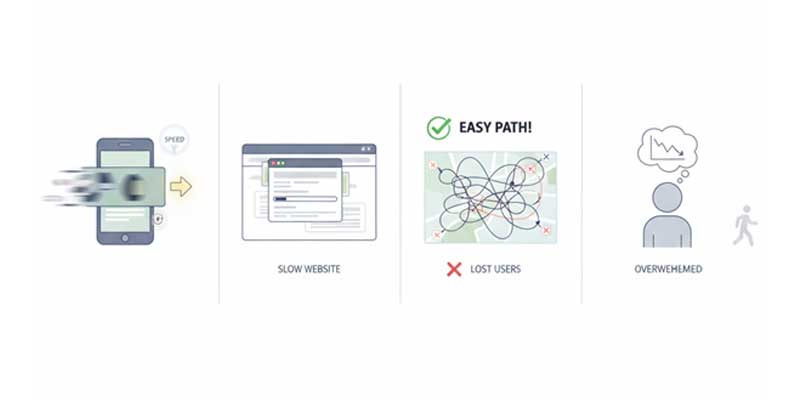
Most brands seek to be seen, but not what comes after the click.
Driving users to:
indications that the brand is more concerned with attention than with experience. Trust does not happen at the top of the funnel; it is built in the details.
Trust exists as a continuous relationship that does not function as a temporary mission. Enterprises usually redesign websites, refresh branding, and run credibility-focused ads as their complete solution to building trust. Maintaining trust requires three specific activities that organizations must undertake.
Organizations need to perform three activities to maintain trust. The first activity organizations need to perform is updating their content regularly. The second activity requires them to deliver their messages in a unified manner.
The third activity requires organizations to maintain their presence through active participation. Organizations need to deliver truthful information during periods of transition or maintenance to build trust. Trust loss occurs when brands stop their trust-building activities.
The various content types establish educational value, which markets expertise to audiences. Trustworthiness is established through blogs, videos, case studies, and social media content when these materials match actual user requirements.
The problem? Most brands develop content that focuses on impressing algorithms rather than serving human needs.
Trust-building content:
Content that exists only to rank or sell erodes trust over time.
In advanced digital marketing, when and where a message appears is just as important as what it says.
Users put more trust in brands that communicate in moments that feel relevant and respectful—rather than intrusive or poorly timed.
This is where many brands fail. They push messages without understanding user context, leading to fatigue and resistance instead of trust.
Smart brands focus on relevance, timing, and environment—allowing trust to build naturally.
The experienced Ad agency falls into the performance metric trap because it fails to establish essential trust components. Advertisers need to track clicks, impressions, and reach metrics because these figures act as critical performance indicators for their campaigns.
The metrics of clicks, impressions, and reach are significant for advertisers, but they fail to drive sustainable growth because trust remains absent. Marketing activities achieve true digital success by validating credibility at every contact point customers encounter.
Marketing activities achieve true digital success when they validate credibility across all customer interaction touchpoints, deliver messages that match actual user needs, maintain user privacy and their attraction to particular content, and establish connections that go beyond one-dimensional sales paths. The project requires a higher level of strategic planning to move beyond basic execution tasks.
At Bud, we treat trust as a core business operation, which is evident in our improved strategic methods, deeper understanding of situations, and dedication to user-centered design.
Bud focuses on:
The current digital environment requires companies to build trust through their activities rather than demand it from customers.

People find it hard to trust online platforms because they take a long time to build trust and can lose it immediately. Businesses face trust problems because their employees want to build trust, but they fail to understand the actual trust-building process.
Companies need to invest in their marketing activities by executing their campaign strategies to achieve better results.
The foundation of a relationship is built on four elements: clear communication, consistent conduct, relevant information, and respectful treatment.
Companies that understand this principle will receive both public recognition and customer trust. Customers develop loyalty when they develop trust in a brand.
WE ARE AN OFFICIAL GOOGLE PREMIER PARTNER