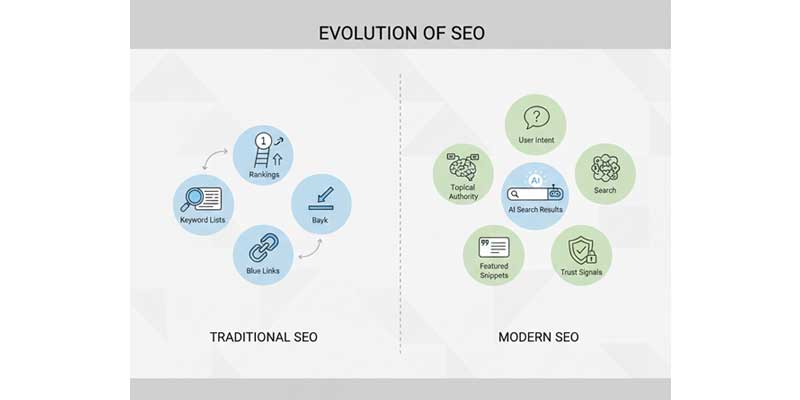
SEO is usually regarded as a complex task, though its fundamentals have remained the same. There are search engines that facilitate the process of the right information, products, and services being located by people. The only difference is the manner in which results are manifested. The search experience continues to change rapidly, with AI Overviews with Google, AI-based search with Bing, and changes in how users behave.
Even with these transitions, SEO is still listed among the most reliable and affordable promotions, though not the cheapest. Many marketing chief officers are investing more money into SEO in 2025, which is a clear sign of their strong loyalty to long-term organic visibility rather than the wins of the moment.
The most critical matter is determining the right area of focus. Those brands that are still stuck in the past or simply looking for recognition through high numbers often end up with poor results. On the other hand, companies that have embraced advanced SEO techniques are focusing on building topical authority, smoothing technical performance, and producing content that truly meets the user's needs. Such an approach results in maintaining good rankings, gaining more trust, and having more sales that can be quantified.
We’ve seen how a clear advanced SEO strategy can drive results even in competitive markets. By combining high-quality content, technical optimisation, and digital PR, brands can compete with much larger players and turn organic search into a consistent growth channel.
So what does it take to achieve this level of success? Below are the SEO tactics and optimisation techniques that will matter most in 2026.
All SEO strategies begin with keywords, and not all keywords are worth targeting. Most business ventures target highly searched-for words that appear appealing but add little value. The first step of advanced SEO is the search intent. Inquire about whether the users are seeking information, comparing, or about to make a purchase. Every intent requires a different kind of content to be successful. Direct conversions are made by high-intent commercial and transactional keywords.
Simultaneously, informational searches also contribute to awareness. Such early searches might not translate instantly to sales, but they allow building topical authority and keeping your brand in the customer's quest. Representing all the intent stages enhances long-term organic visibility, rather than short-term wins.
Competition and Keyword volume are also important. Though keywords with high volume might be attractive, they are usually occupied by large brands with high authority. A more intelligent approach is to aim for a balanced combination of mid-volume and less competitive keywords. This enables you to rank faster, attract qualified traffic, and build organic visibility in a more sustainable way.
The other aspect that most brands do not pay attention to is keyword gaps- search terms that your competitors are ranked above, but you do not rank highly. These are some of the easiest wins in advanced SEO. When competitors rank higher than you do in terms of conversions, you are losing out on traffic that already works.
A keyword gap analysis provides you with insights into areas in which you are losing ground in organic visibility and areas in which you can make short-term gains with ease. It is also useful in creating a more intelligent content plan. By creating and optimising pages around these lost keys, you build your topical power and regain lost placement from your competitors, rather than competing on random high-volume keys.
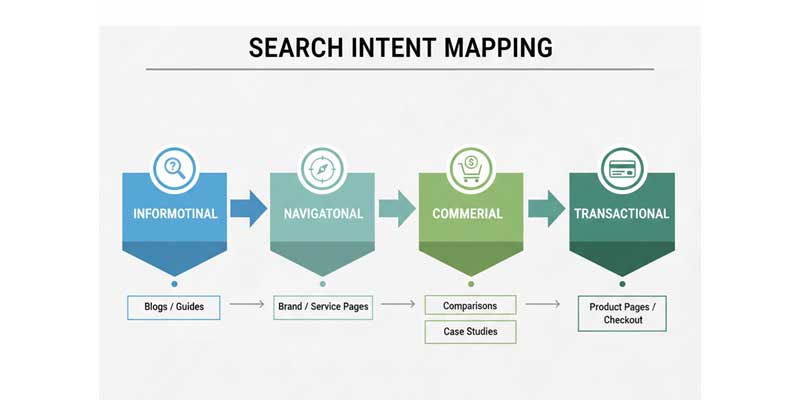
Matching relevant content to search intent is one of the most essential aspects of advanced SEO in 2025. Search engines are now very good at understanding what users want. If someone searches for a “how-to” query, they expect a clear guide. If they search for a “best” or “software” term, they expect comparisons and reviews, not a direct sales page.
When content does not match intent, performance drops quickly. Users leave the page, and this signals to search engines that the result is not helpful. Over time, this reduces organic visibility. To avoid this, always review the top-ranking pages before creating content. Look at the format, depth, and structure they use.
The goal is not to copy competitors, but to meet user expectations first. By aligning content with intent and improving on what already exists, you strengthen topical authority and give your pages a better chance to rank consistently.
When many websites post the same kind of content, like the top tools for small businesses, most pages will look similar. To achieve a competitive edge in advanced SEO, one must have a different angle. This may encompass the utilization of original data, customer surveys, real-life examples, or expert knowledge unavailable to other people. Specific proof or experience that one is satisfied with is bound to attract attention and trust.
By contributing original information, you can gain authority over the topic in question and ensure that what you write can be more helpful to people. It further enhances organic visibility by increasing the likelihood of being mentioned and receiving backlinks from credible sources. Experience-based, data-driven content is particularly effective since it presents search engines and users with something truly new. By prioritizing originality over repetition, brands will rise in the rankings, create more appealing links, and improve their overall search engine performance.
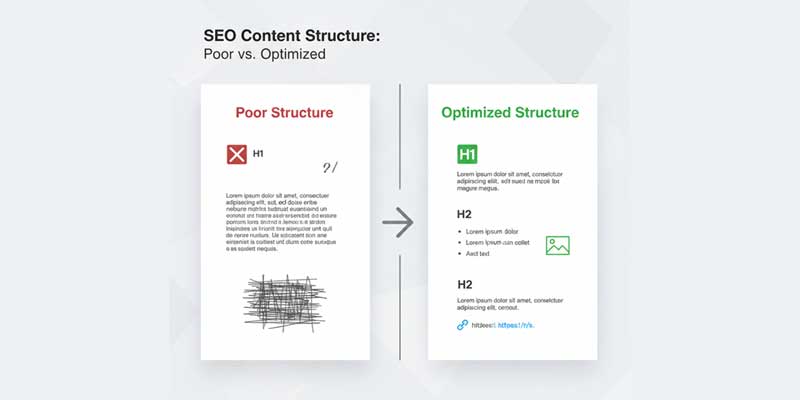
Readability is a significant part of advanced SEO that is often neglected. Search engines like Google favor easy-to-read, understandable content. If visitors are caught up in paragraphs that are too long or overly complicated, it quickly becomes a factor detrimental to organic visibility.
The simplicity of words, short paragraphs, and understandable subheadings keeps the user interested and demonstrate the search engine that your content is useful. Content performance is also enhanced using visual elements. Photos, graphs, and illustrations can clarify complex concepts and simplify the reading process. The visuals should be placed periodically throughout the content to increase engagement and backlinks, which contribute to topical authority and long-term SEO development.
E-E-A-T: Experience, Expertise, Authority, and Trust, is now of high importance in Google. This is not a craze; it is an essential aspect of sophisticated SEO. Search engines would prefer to present some content that is trustworthy, authored by the learned, and backed by actual experience.
In the case of brands, this suggests developing content that will obviously show experience. Subject expert writers or reviewers should write or revise articles with real-life experiences, and these articles should have the structure to exhaust a certain topic. Such a strategy will build topical authority and send encouraging signals to search engines, enhancing organic performance in the long run.
It is noteworthy that, when replacing thinned or generic writing, expert writing takes over. When the content is based on actual experience and credibility, users will have greater trust, stay longer, and search engines will tend to rank it higher.
The answer boxes that appear at the top of search results are called featured snippets. They can be considered a potent means of enhancing organic visibility in advanced SEO and of making your brand a reliable voice. The inclusion of a featured snippet is a way to make your content stand out, even above the top-ranking pages.
Lead Content should address popular queries clearly and straightforwardly to gain featured snippets. Bullet points, numbered lists, short definitions, and step-by-step guides are the most effective. This structure of the content also builds topical authority and informs search engines that you are an expert, helping them rank your page at the top of search results.
Search engines can’t rank what they cannot crawl or understand, which makes technical SEO a critical foundation for advanced SEO and organic visibility in 2025.
Site speed is one of the most important factors. Google reports that increasing page load from one to three seconds raises bounce rates by 32%. For e-commerce and booking sites, these delays directly affect revenue. Compressing images, reducing unnecessary scripts, and using CDNs can significantly improve performance.
Structured data is increasingly essential. Schema markup not only helps pages appear in rich snippets but also helps AI systems understand content. Brands that optimise with structured data strengthen their topical authority and stand out in modern search results.
Internal linking is another key factor. Orphan pages—those not linked from anywhere—are nearly invisible to search engines. Fixing internal links is often one of the fastest ways to unlock new traffic.
Improving the website structure through navigation changes and developing internal links increased search impressions, strengthening both organic search performance and website authority.
Links are still one of the strongest signals of authority, but the way to earn them has changed. Buying low-quality links or spamming directories may give short-term results, but it often harms SEO in the long run. Today, consistent, high-quality backlinks are key to building lasting organic visibility.
Digital PR is one of the most influential ways to achieve this. Campaigns such as hero content, reactive PR, and expert insights generate backlinks from trusted sources, strengthening topical authority and improving search rankings. For example, a sustained link-building strategy generates high-authority backlinks, averaging more per month, reinforcing domain authority and improving competitiveness in a highly saturated online travel market.
Ten blue links are no longer the only search results. Artificial intelligence (AI) generated summaries have become the new trend as many users see them at the top of the page. This change poses a threat and an opportunity. When your brand is referenced in AI responses, you have earlier access to users in their decision-making process.
Otherwise, you will lose the organic visibility even when your pages are successful. AI search optimisation is becoming an important component of advanced SEO. It demands clear, well-planned, human-oriented, and content quite backed by high authority indicators. Quality content is in greater demand than ever, as AI systems prefer content that demonstrates expertise, trust, and topical authority. The impact is already clear.
With content developed with AI in mind, the brands will gain visibility beyond traditional search.
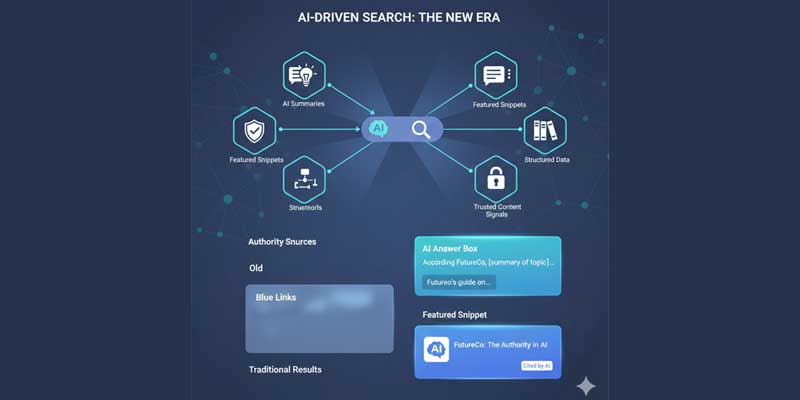
SEO strategies should be based on three areas in order to remain competitive. In higher levels of SEO, artificial intelligence is needed. The content should be well-organized, correct, and authoritative enough to be displayed in AI-generated search engines and summaries.
The authority of the brands is also gaining prominence. References in reliable sources, although not necessarily with direct links, contribute to establishing topical authority and increase the organic one's visibility over time.
Lastly, local optimisation remains important for physical businesses. Good reviews, an accurate business listing, and consistent contact information will help rank locally and make it easy for customers to find you.
The success of any advanced SEO strategy rests on three main pillars: purposeful content, solid technical underpinnings, and authority built through credible links and coverage. These factors combine in advanced SEO to enhance organic visibility and deliver measurable business outcomes.
These methods create a good starting point in any long-term SEO strategy, starting with the selection of correct keywords, all the way to being AI-ready to search. The combination of these SEO pillars yields a clear result. The overwhelming growth in organic traffic, visibility, and conversions demonstrates the true value of establishing topical authority and implementing a powerful, high-quality SEO strategy that delivers measurable outcomes. The measurability of SEO in 2025 should be based on quantifiable business performance, not rankings.
As an SEO Agency in Bangalore, Bud helps smaller brands compete with larger players by building smart digital strategies that drive visibility, relevance, and real business growth.
WE ARE AN OFFICIAL GOOGLE PREMIER PARTNER