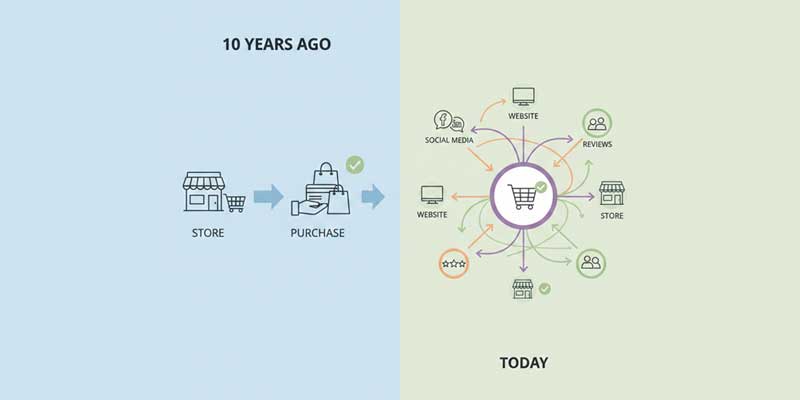
Years ago, people could buy products through a simple process. Customers needed to visit a store to evaluate two or three products, which they would then think about before deciding to buy one item during their initial store visit. One touchpoint was enough to drive a decision.
People approach purchase processes today through completely different methods. Instagram shows a product to users, which then leads them to a website. Customers will go to a store to shop after checking online reviews and consulting with friends before making their purchase, which may come from a different brand or platform. Modern consumers have adopted a back-and-forth shopping pattern as their standard buying behavior.
This shift clearly shows how buyer behavior has changed and why brands need a smarter customer journey strategy. It also reflects the ongoing evolution of the marketing funnel, where decisions are no longer linear. A recent Google study confirms what consumers already experience—shopping journeys are more complex, connected, and constantly in motion.
For years, marketers followed the traditional funnel—awareness, consideration, and purchase. This approach worked well before social media, when consumers moved through a simple, step-by-step buying process.
Today, that structure no longer fits real buyer behavior. People switch constantly between online and offline touchpoints. They spend hours online each day, discovering products through reels, influencer content, reviews, ads, and everyday conversations.
This shift highlights the need for a new customer journey strategy. Buying decisions now involve repeated back-and-forth, not a straight line. This change reflects the ongoing marketing funnel evolution, where the old model is no longer enough.
In this blog, we explain why the traditional funnel is outdated and how brands can use influence maps to plan smarter campaigns, use budgets more efficiently, and drive faster growth.
For several years, marketers designed campaigns in a straight funnel. The concept was that of awareness, move to consideration, and then convert to conversion. Neat and easy to handle was the look of this approach.
In the modern world, however, actual buyer behavior does not operate in such a manner. Humans do not make choices straightforwardly. The customer can encounter a brand on Instagram, forget about it, and then see it days later in a YouTube video. They would later go to Google and compare prices, reviews, or even visit a brick-and-mortar store to search for the product.
There are buyers who make purchases on the spot, and those who wait as long as two weeks, contemplating or waiting for a discount. There are numerous habits of switching among platforms before making a decision. This is what contemporary shopping experience resembles: a non-linear, multi-touch, and personal experience. There is no one route that two customers take, and no particular way to go from awareness to action.
However, the old funnel model is still used by many marketers. This lack of touch with reality and buyer behavior frequently results in budget waste, lost prospects, and communication with customers at the wrong time. The smarter customer journey strategy is what the brands require today and is indicative of this reality.
The current marketing funnel development requires a flexible planning which will accommodate the way individuals find, judge, and purchase products in reality. That is where influence maps come in - to assist the brands in learning to see the actual decision-making paths, improve their campaigns, and reach the customers when they need it.
People today make buying decisions in unpredictable ways, but influence maps provide a better way to understand their decision-making process. An influence map creates a different path from a traditional funnel because it does not follow its established linear progression.
In contrast, have started to focus on impact, where and how a brand imprints itself as the journey proceeds with a customer. This approach aligns better with real buyer behavior, where decisions change based on timing, intent, and context.
As part of the continued marketing funnel evolution, influence maps support a more flexible and personalised customer journey strategy. Each journey is shaped differently based on customer mindset and actions, helping brands reduce missed opportunities and deliver the right message at the right moment.
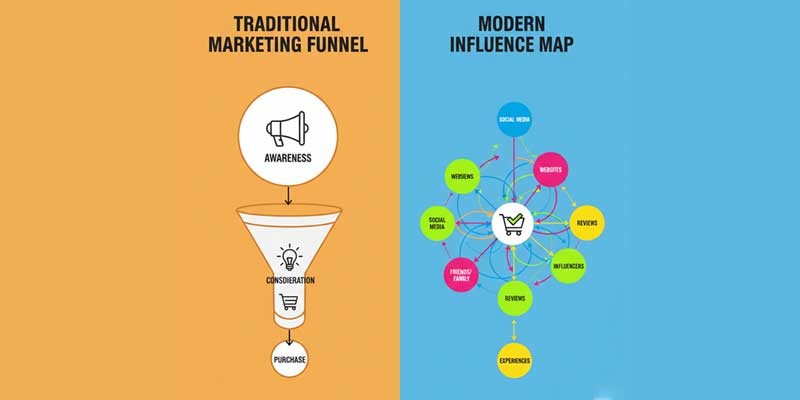
The influence map understands that every shopper follows a different path. This means one fixed marketing plan cannot work for everyone. Instead of forcing customers into a straight-line funnel, it adapts to real buyer behavior—including jumps, loops, and quick decisions.
This approach reflects the ongoing marketing funnel evolution, where influence matters more than rigid steps. Here’s what makes the influence map different:
Focuses on influence, not stages: It shows where a brand can make an impact, not just where the customer sits in a funnel.
Every journey is unique: Since no two buyers think or act the same, each customer journey strategy is mapped differently.
No stage restrictions: A customer can move from discovery to purchase instantly—and the influence map supports that.
Behavior-based touchpoints: Marketing decisions are planned around real actions, not assumptions.
Real-world journeys: One buyer may go from a YouTube video to an in-store display and then use a coupon. Another may purchase directly from an influencer's post.
These journeys clearly show why understanding real buyer behavior is essential to planning influence and building a smarter, more effective customer journey strategy.
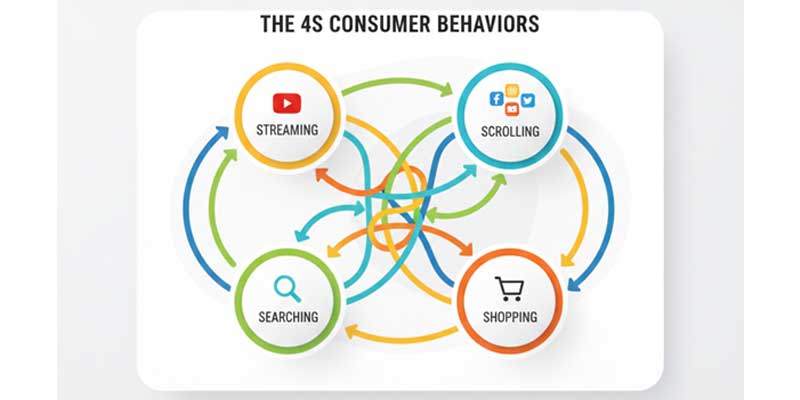
The four major behaviors that define how modern people discover, compare, and buy goods are at the center of the modern buying process. These actions are extremely realistic buyer behavior and demonstrate why conventional funnels are no longer effective.
Let’s break them down.
Streaming has now become more than entertainment; it is a highly effective discovery channel, turning idle viewers into interested customers. Where it occurs: YouTube, OTT, live shopping channels, IGTV. Form it takes: Having a product review or briefly watching an ad between the times when someone is binge-watching something. Why it is important: Videos are easy to pay attention to and leave a powerful visual and emotional impression at the very beginning of the customer journey, even before search. Case Study: A skincare brand has a 15-second YouTube video with noticeable outcomes. The customer was not about to make a purchase, but the brand remains on their mind.
The fusion of trends, culture, and shopping is in scrolling. The place of appearance: Instagram, TikTok, Facebook, Reels, influencer stories. What it appears to be: A user will view an influencer post, save the product, or tap Shop Now. Why it is important: Social channels will turn product discovery into an everyday experience and alter the way decisions are made throughout the marketing funnel. Example: An influencer labels a handbag on a reel. It is a click, a person adds it to the cart, and the moment of purchasing is made in several seconds.
Search is intentional; it is the kind of thing where interest is transformed into action. Where it occurs: Bing, Google, Amazon, voice search, comparison sites. Its appearance: Searching: Review, feature, or best running shoes, below 5000 INR. Why it is important: Customers are actively seeking solutions. Brands should show the correct information at the right time to align with actual buyer behavior. Scenario: After a social ad, one will type "Is Brand X waterproof?" When your brand does not appear, you will lose the opportunity.
The last process is the shopping one, yet the most delicate one. Location: D2C websites, e-commerce sites, applications, brick-and-mortar stores. What it appears like: The user makes a purchase or leaves the cart based on trust, delivery, or offers. The significance of it is that price alone is not sufficient. An effective customer journey strategy depends on an unproblematic experience. Case in point: One customer walks out of a store because of a sluggish checkout. The other one makes the purchase because of the process's speed and simplicity.
These 4S behaviors have led to the increased unpredictability of the buying journeys, yet they are full of new possibilities. This change points to the necessity of the marketing funnel development, where the brands get beyond linear thinking and implement flexible, AI-based marketing strategies that reflect how individuals truly shop nowadays.
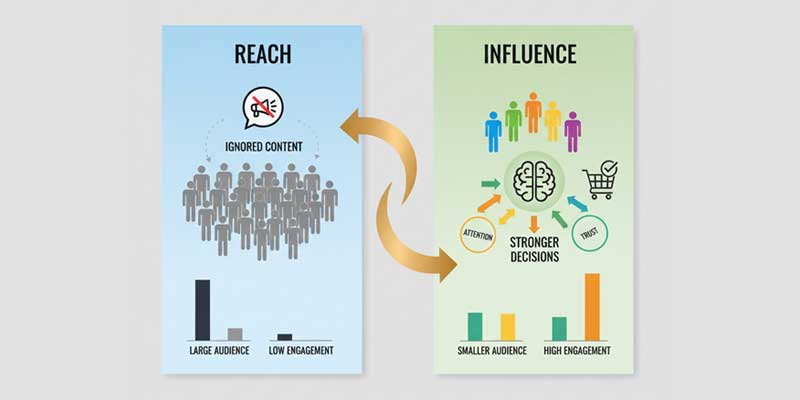
It is not that easy to reach people as it used to be influencing. Although high visibility is still important, the real issue is to have people perceive, be bothered by, and believe what is said. This distance between reach and influence indicates altered buyer behavior.
The influence is reliant on three factors:
Attention: Was the customer able to listen to the message?
Relevance: Did the message come in handy, or was it meaningful at that point in time?
Trust: Was it provided on a platform, created, or a source of a belief they maintain? The three are equally important as reach. The video advertisement can be seen by a million people, yet when most of the audience skips or ignores it, there is little impact.
Conversely, a greater impact can be achieved by a smaller group of people who care and become very active, such as by watching a video to the end, reading a blog, or saving a post. The type of involvement influences the decisions and contributes to a more powerful customer journey strategy.
Marketers need to refine their thinking beyond impressions and consider the touchpoints that do make a difference in the continued development of the marketing funnel. With the right insights into where attention, relevance, and trust converge, it becomes important to influence real buyer behavior and spur growth.
The future of marketing depends on brands' ability to strike a balance between reach and real influence. The funnel used in the past is no longer sufficient to facilitate the present-day buying processes. The current consumer behavior is dynamic, non-linear, and complicated, and thus demands a smarter approach.
This change brings about a necessity of marketing funnel evolution where the brands cease to rely on a strict model and instead pursue a more adaptable approach to the customer journey. Influence maps offer such a direction.
They assist brands in striving beyond visibility and going where real impact is made. Marketers can develop more powerful strategies that lead to sustained growth by applying AI and understanding how and where influence affects decision-making.
As a creative marketing agency that blends bold ideas with strategic insight, Bud helps brands rethink outdated models like the traditional funnel to better align with modern customer journey strategy and evolving buyer behavior.
For more insights, updates, and informative blogs, follow Bud and stay tuned.
WE ARE AN OFFICIAL GOOGLE PREMIER PARTNER