Digital marketing in 2026 is more developed than ever before and competitive. The brands are
increasing their expenditure on AI tools, targeted advertising, and multi-channel campaigns. The
never-ending updates to algorithms and the rising cost of ads have led many companies to a
central question: Is SEO still worth it?
The answer is- yes.
SEO ROI remains among the most powerful in the marketing sector despite the emergence of new tools and fast-win strategies. Why? Since SEO links your business with individuals who are already at the stage of searching for what you have to offer. The fact that a person has a specific purpose when searching online, and that SEO can make your brand visible at the right time without paying a lot of money per click, can make your brand visible at the right time without paying a lot of money per click.
In comparison to paid advertisements, which cease the moment you halt your funds, SEO is aimed at organic traffic growth, which goes on increasing with time. It is not about spikes on a short-term basis, but long-term visibility and outcomes.
SEO remains the best option among so many channels of marketing competing for the attention of the target audience since it can provide a high rate of conversion and is cost-effective. In 2025, SEO ROI is not simply good; it even beats paid ads, email, and social media in terms of sustainable development and long-term returns.
ROI (Return on Investment) in digital marketing demonstrates the amount of revenue you get in relation to your expenses in a campaign or a channel.
The formula is simple:
ROI = (Revenue – Cost) / Cost
However, in the present day, not all marketing channels will yield an equal payback. Certain strategies will achieve immediate gains, at the expense of others, which are aimed at the long-term value and organic growth of traffic- in this aspect, SEO should be mentioned.
Short-Term vs Long-Term ROI
The performance of various channels can be comprehended in a simple manner as follows:
SEO (Organic Search)
PPC (Google/Facebook Ads)
Social Media Ads
Email Marketing
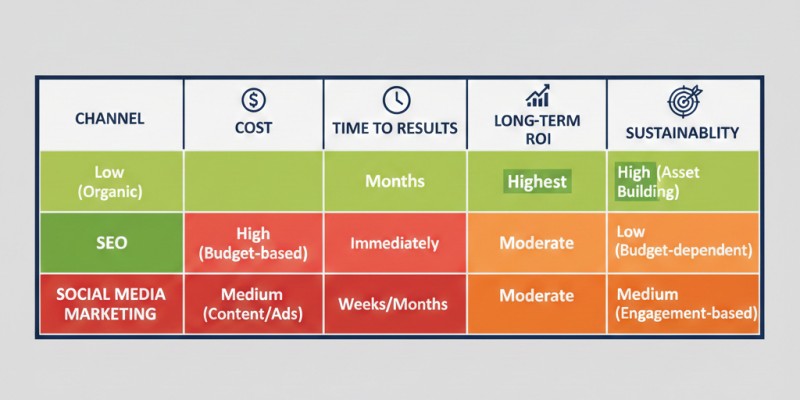
Your returns increase with the time spent on SEO. With your site gaining authority, ranking on high-intent keywords, and organically growing your traffic, your cost per lead keeps falling as you keep getting more conversions.
That is why the ROI of SEO is getting stronger month after month. You are not paying per click. In its place, you are developing a digital asset that will continue to deliver over time.
That is the true benefit of SEO: sustainable growth, reduced long-term costs, and the ability to generate steady returns.
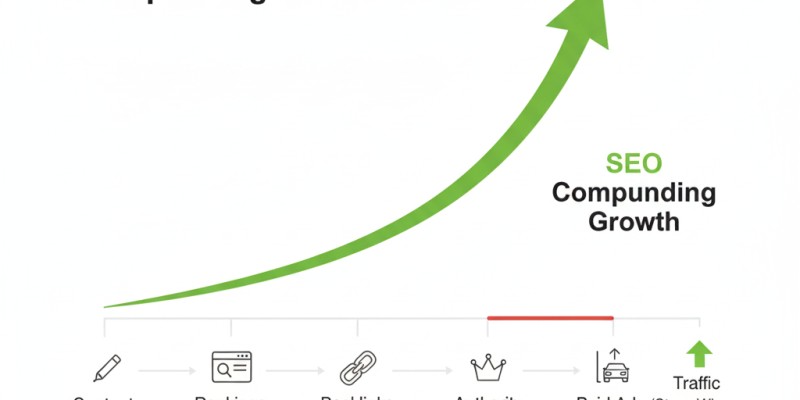
Organic traffic growth through SEO continues to accumulate with time, as opposed to paid advertising, where the ads cease the moment you run out of money. When you rank on the first page of Google, particularly in the top 3 results, you will be visible without paying per click.
This is the mechanism of the compounding power of SEO:
Consider it this way: paid advertisements are like renting space, whereas SEO is like owning a valuable property that continues to provide income.
Although the results may require some time at the initial stages, the long-term outcomes would be significantly greater. Your expenses remain the same, and your traffic and leads are growing.
This is why it is one of the best long-term marketing investments for businesses that should be sustainable.
PPC ads cost you per click, and this price continues to rise with the increase in competition. However, in SEO, the cost per lead decreases over time. The higher your site is ranked on more search terms and the more you have the right group of people visiting, the higher the number of leads without paying per visit.
This is where the power of SEO ROI is found.
Simple Example
Take the case of a SaaS company spending 10,000 in 6 months on SEO:
Now compare this with PPC:
Result:
The reasons why SEO is more cost-effective.
The better your rankings, the lower your costs per acquisition and the more traffic and leads you get. This is the strategic advantage of organic traffic growth.
That is why long-term oriented businesses prefer SEO because it achieves better SEO ROI, a higher quality of leads, and long-term growth without relying on continuous ad spending.
Individuals have more trust in organic search results compared to those of paid ads. Users will prefer to use the first organic listings when they are searching on Google rather than the sponsored ads. As a matter of fact, the top 3 organic have over 50 percent of the total clicks.
That is why the increase in organic traffic is so useful.
Research also confirms the fact that users like results that are earned naturally, rather than those that are paid. This trust leads to:
Organic ranking gives your users the impression of a more reliable and relevant brand. That is to say, the traffic is not only increased in volume, but also more qualified.
This is the other major reason why the ROI of SEO is more robust, as opposed to most marketing platforms. Not just any traffic, but traffic that can be trusted and is more likely to turn into customers, is what you are receiving.
SEO is an individual undertaking, but it enhances the overall performance of all your online marketing activities. When properly executed, it helps grow organic traffic and enhance the effectiveness of all other methods that you adopt.
Here’s how SEO helps:
Think about user behavior. The question is, when one views your Facebook advertisement or watches your video on YouTube, what is the next thing they tend to do? They look for your brand on Google. When your website is highly ranked, it creates trust. Otherwise, you miss the boat.
This is the untold merit of SEO. It not only generates traffic but also renders all your marketing channels effective.
This is why businesses that invest in organic traffic development experience greater overall performance and increased SEO ROI across the entire digital strategy.
Nowadays, SEO is very different from how it used to be only a few years ago. The algorithm used by Google is changing rapidly, and the new way of searching has to be embraced by the business to ensure it can still achieve good returns from search engine optimization and that organic traffic keeps growing.
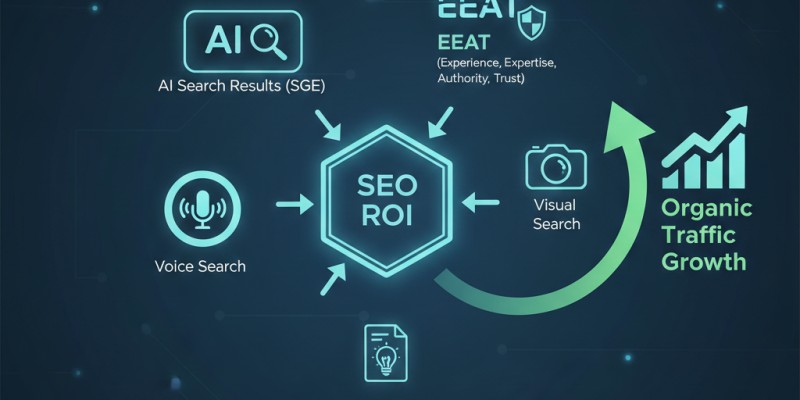
Such transformations include one of AI-powered search results, such as SGE, and AI Overviews, where users are presented with instant summaries rather than simple links. It can seem difficult, but, on the contrary, it opens new opportunities: brands publishing useful, well-organized content remain present in such AI responses and gain greater visibility. Simultaneously, voice and visual search are increasing rapidly. Individuals are now doing full query searches rather than searching for short keywords; therefore, the long tail optimization will facilitate an increase in organic traffic. EEAT is another factor valued more by Google: Experience, Expertise, Authority, and Trust. This is to say that what you write must be authoritative and practical, and you must write with actual knowledge. Simply put, SEO in 2025 is not only about ranking; it is also about trust, value creation, and creating content that makes the search engine pay off over the long term.
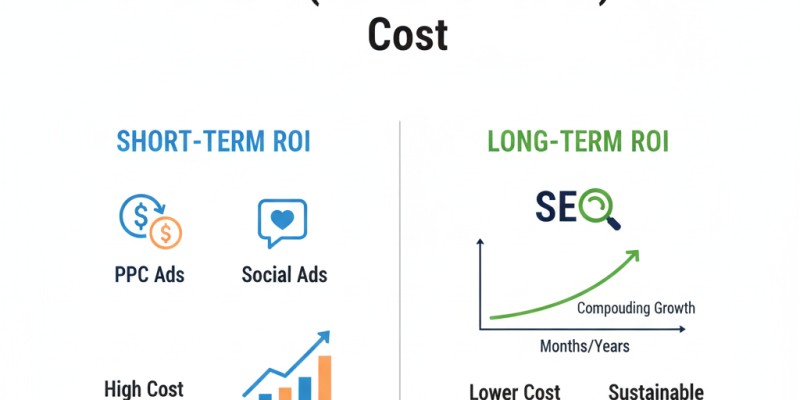
SEO is effective in the modern, dynamically digitalized economy with increasing advertisement prices, as it provides constant returns in the long run. After publishing and optimization, traffic, leads, and visibility on target content are driven without the need to spend on ads. Since it makes companies grow steadily organically and reach a higher conversion rate, and reduces the cost per lead, SEO remains an intuitive decision when it comes to long-term expansion of the business.
In order to minimize acquisition costs, establish credibility with your audience, and develop a stable stream of leads, in 2026, investing in SEO Services will not only be a good idea but also the key to long-term success.
WE ARE AN OFFICIAL GOOGLE PREMIER PARTNER